Mental Health Risk Prediction
This isn’t just another machine learning project. It’s a quiet attempt to solve a loud, often overlooked problem.
This isn’t just another machine learning project. It’s a quiet attempt to solve a loud, often overlooked problem.
The Mental Health Prediction Model was born from something personal and something observed; it’s a mix of late-night overthinking and a conversation during a university application meeting on Google. What started as curiosity turned into a realization: international students (and really, anyone under pressure) are often struggling silently with mental health, far from home, under heavy expectations.
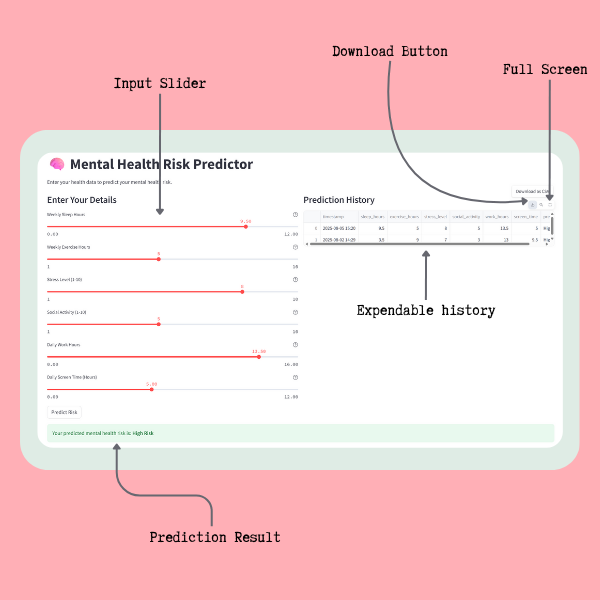
So I built a simple app. It’s powered by a trained basic model and designed to take in user data and predict mental health risk, assisting in getting users to support more quickly, like a pre-counselor counselor. Think of it as a digital Alfred, checking in before Batman breaks.
It’s not a glamorous instant fix, but it helps someone take the first step toward help.
So if you’re curious about how it all came together, maybe even want to help build a better, robust model, or just want to see the story behind the code, the blog post goes deeper, from setting up FastAPI and Streamlit to the real-life inspiration behind it.
As Marcus Aurelius once said,
You have power over your mind—not outside events. Realize this, and you will find strength.